After Midnight, America Hits Play: What the Data Says About Our 2 A.M. Viewing Obsession
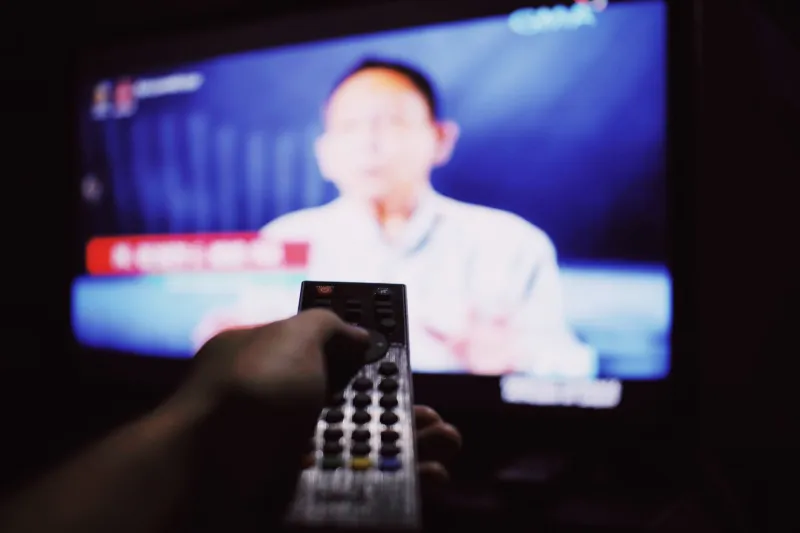
It's 1:47 a.m. somewhere in Ohio right now, and someone is watching episode six of a show they swore they'd stop at two. They're not alone. Late-night streaming has quietly become one of the most reliable patterns in American entertainment — a nightly migration to the couch, the phone, the laptop screen glowing in a dark bedroom.
The numbers behind that migration tell a story about how we live now.
The Traffic Doesn't Sleep
Ask anyone who works in streaming infrastructure and they'll tell you: peak traffic isn't prime time anymore. While the 8-to-10 p.m. window still dominates overall viewership, a stubborn secondary spike shows up between midnight and 2 a.m., driven by a smaller but fiercely loyal audience of night owls, shift workers, students, and chronic "one more episode" sufferers.
Platform engineers have a nickname for it in some circles: the second wave. It's smaller than evening peak, but it's remarkably consistent. Weeknights included. Sundays included. The night before a Monday morning meeting? Especially then.
What's interesting isn't just that people watch late — it's what they watch. Late-night sessions skew heavily toward familiar comfort content. Rewatches of sitcoms, procedural dramas, and cooking competition shows dominate the post-midnight window, while prestige TV and new releases cluster earlier in the evening. Your brain, it turns out, doesn't want novelty at 1 a.m. It wants something it already knows.
Why 'One More Episode' Hits Different After Midnight
Sleep researchers have a few explanations, and none of them are flattering to our willpower.
First, there's decision fatigue. By the end of the day, your capacity for self-regulation is essentially spent. The same mental muscle that says "no thanks" to a fourth beer or a second dessert is running on empty by midnight. So when the autoplay countdown gives you five seconds to object, objection is rare.
Second, there's the dopamine of resolution. Episodes are engineered — increasingly so — to end on soft cliffhangers and unresolved beats. That's not a conspiracy, it's craft. But the effect compounds at night, when your judgment about whether a cliffhanger "matters" is at its weakest.
Third, and maybe most underrated: late-night streaming is often the only unstructured time some Americans have. Parents of young kids, double-shift workers, caregivers — the 11 p.m. to 2 a.m. window is frequently the first block of the day that belongs entirely to them. Of course they spend it watching. It's not weakness. It's scarcity.
The National Map of the Night Owl
Late-night viewing isn't evenly distributed. Urban metros with service-industry economies — Las Vegas, New Orleans, New York — show later average watch times than the national norm. College towns spike during finals weeks in ways that are almost visible on a graph. And regions with heavy concentrations of night-shift workers, from hospital corridors to warehouse floors, show daytime viewing patterns that flip the conventional wisdom entirely.
There's also a device divide. After midnight, the living room TV loses ground fast to phones and tablets. The post-midnight binge is, overwhelmingly, a personal-screen activity — often in bed, often with the brightness turned all the way down, often with the audio low enough to require subtitles. If you've ever watched a show at volume four with captions on at 2 a.m., congratulations: you are a data point.
What the Late-Night Habit Is Really Telling Us
Strip away the judgment and the pattern reveals something bigger about entertainment culture. Streaming didn't just unbundle cable — it unbundled the schedule. There's no sign-off, no late movie rerun, no static on channel 47 gently telling you the broadcast day is over. The content supply is infinite, and the remote is always within arm's reach.
That's a genuine freedom, and it's also a genuine trap. The same infrastructure that lets a nurse decompress with The Office at 3 a.m. after a brutal shift also makes it frictionless for the rest of us to lose an hour we didn't have to spare.
Some platforms have started nudging. Sleep timers, "are you still watching?" prompts, and bedtime reminders are small features, but they acknowledge what the data makes obvious: left to its own devices, the autoplay machine will happily run until sunrise.
Counting What Counts
At NumericStream, we spend a lot of time thinking about the numbers behind what we watch — and the 2 a.m. scroll might be the most human data point of all. It's the hour when entertainment stops being a plan and becomes a reflex, when the algorithm knows you better than your calendar does.
The takeaway isn't "stop watching TV late." For plenty of people, that window is earned rest. The takeaway is simpler: know your own pattern. If your late-night sessions are a choice, enjoy every minute. If they're a default — an autoplay countdown you never actually decided on — maybe it's time to make the countdown work for you instead.
The stream never sleeps. You, statistically, probably should. But at least now you know exactly why you don't.