Cracking the Feed: What Those Invisible Platform Numbers Are Actually Doing to Your Screen Time
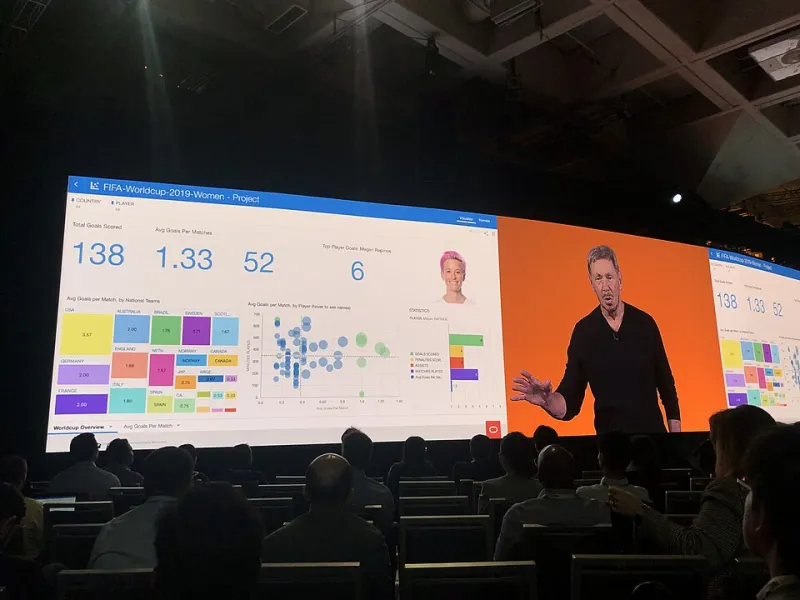
Photo: GeneralAB13, CC BY-SA 4.0, via Wikimedia Commons
You open TikTok, Instagram, or Netflix and within seconds something grabs you. Feels like luck, right? Maybe even fate. It's not. Behind every piece of content that lands in front of your eyeballs is a layered system of numeric signals so precise it would make a NASA engineer jealous. Welcome to the algorithm's actual language — and once you learn to read it, you'll never consume content the same way again.
Here at NumericStream, we live for this stuff. Numbers aren't just domain names and TV channel listings. They're the invisible architecture holding your entire digital entertainment life together. So let's break it down.
The Three Numbers That Matter More Than Likes
Most people think social platforms run on likes and follower counts. That's the surface layer — the stuff platforms want you to focus on. The real machinery runs on three much less glamorous metrics.
Click-Through Rate (CTR) measures how often people actually tap or click on a piece of content after seeing it. A video with 100,000 impressions and 3,000 clicks has a 3% CTR. On YouTube, the average hovers between 2% and 10%, and anything above 6% tends to signal the algorithm to push content harder. Creators who obsess over thumbnail design and title phrasing aren't being vain — they're chasing that number.
Retention Rate is arguably more powerful. It tracks what percentage of a video (or episode, or reel) people actually watch before bailing. Platforms like YouTube have publicly hinted that a 50% average view duration is a strong positive signal, but internal data from creators who've worked with analytics consultants suggests the threshold is more nuanced — it varies by content length. A 10-minute video holding viewers for 6 minutes performs differently than a 60-minute documentary hitting the same ratio.
Engagement Ratio goes beyond raw comment counts. It factors in saves, shares, replays, and even how long someone hovers over a post before scrolling. On Instagram, a save is reportedly weighted more heavily than a like because it signals genuine intent. Shares push content to cold audiences. Replays on short-form video tell the algorithm that something created a loop — and loops mean addiction potential, which platforms love.
"Most creators are optimizing for vanity metrics when the platform is scoring something completely different," says one independent data analyst who works with mid-tier YouTube channels. "It's like studying for the wrong test."
Streaming Platforms Play the Same Game, Just Quieter
Netflix, Hulu, Max — they all run their own internal scoring systems, though they're far more secretive about the specifics. What's been pieced together through industry reporting and creator-side data tools paints a pretty clear picture.
Netflix reportedly uses a metric called completion rate to evaluate whether a show is worth promoting on its homepage. If a large percentage of people who start a series abandon it by episode two, that show gets buried regardless of its critical reception. This is why you'll sometimes notice a critically acclaimed film disappear from the front page almost immediately — the numbers didn't cooperate.
Hulu leans heavily on re-engagement signals: how often users return to a platform after watching a specific piece of content. A show that brings people back to the app repeatedly is algorithmically more valuable than one that gets binged in a single weekend and forgotten.
Spotify, which has increasingly blurred the line between music platform and general media hub, uses skip rate as a core signal for podcast and music recommendations. If listeners are jumping past the first 30 seconds of a track or episode consistently, that content gets deprioritized — even if the overall play count looks healthy.
What This Means If You're Creating Content
If you're putting anything out into the digital world — YouTube videos, Instagram reels, a podcast, even a newsletter — here's the honest advice from people who study these systems for a living:
Hook timing is everything. The first 3 seconds of a video and the first sentence of a written piece are disproportionately weighted. Platforms measure drop-off at specific timestamps, and early abandonment tanks your score fast.
Optimize for saves and shares, not likes. Teach your audience something they'll want to reference again. Practical content — tutorials, comparisons, how-tos — tends to accumulate saves at a higher rate than purely entertaining content.
Watch your retention curves, not just totals. Most creator dashboards now show you a graph of where viewers drop off in your videos. Those dips are your editorial feedback. If everyone leaves at the 4-minute mark, something broke there.
Consistency signals reliability to the algorithm. Platforms reward accounts that post on predictable schedules because it makes their content pipeline more manageable. Two posts per week, every week, outperforms five posts one week and zero the next.
What This Means If You're Just a Viewer
Here's the part nobody really talks about: understanding these numbers gives you agency as a consumer, not just a creator.
When you replay a video, you're boosting its score. When you save a post, you're voting for that type of content to appear more in your feed. When you watch 90% of a Netflix episode before closing your laptop, you're telling the platform's recommendation engine something specific.
You are, whether you realize it or not, actively programming your own feed through your behavior. The algorithm isn't some omniscient force — it's a mirror. A very sophisticated, heavily monetized mirror built from millions of numeric data points.
So the next time your feed feels like it's reading your mind, remember: it's reading your numbers. And now, at least a little bit, you can read them back.
NumericStream covers the intersection of data, entertainment, and digital culture. Every channel. Every format. All in one.