Why Your Next Website Address Might Just Be a Number
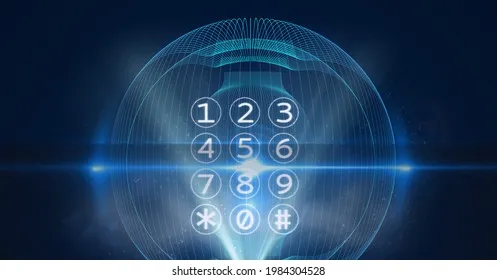
Photo: numeric keypad glowing digital address bar internet technology, via www.shutterstock.com
There's a quiet revolution happening in the way Americans navigate the web, and it doesn't involve a flashy new browser or some AI-powered search engine. It's simpler than that — and in a lot of ways, way more interesting. Numbers are taking over the address bar, and the old-school URL as we know it is starting to look a little long in the tooth.
At NumericStream, we're literally built around this idea. Our domain, 388620.com, isn't some random accident — it's a nod to a growing cultural shift where brevity, memorability, and function are winning out over clever wordplay and brand-name web addresses. So yeah, we've got some skin in this game. But the trend is real, and it's worth unpacking.
The Problem With Traditional URLs (Yes, They Have Problems)
Let's be honest: most website addresses are kind of a nightmare. Between the hyphens, the misspellings, the endless variations of .com vs. .net vs. .io, and the sheer length of some corporate URLs, it's no wonder people stopped typing addresses into browsers years ago. We Google everything now — or at least, that's been the workaround.
But Googling has its own friction. You get ads, you get irrelevant results, you get distracted. What if you just... knew the address? What if it was short enough to actually remember?
That's the pitch for numeric shortcuts, and businesses are buying in.
Vanity Numbers Go Digital
Remember 1-800 numbers? That whole industry was built on the same psychological principle: humans remember numbers better when they carry meaning or pattern. 1-800-FLOWERS worked because the letters mapped to something recognizable. But pure numeric sequences — think 411, 911, or even something like 88888 — carry their own kind of stickiness, especially in cultures where certain numbers carry symbolic weight.
In the US, we're seeing this logic migrate from phone lines to web addresses. Short numeric domains are being snapped up by startups, media companies, and aggregator platforms that want something clean, fast, and globally pronounceable. A domain like 388620.com doesn't have a language barrier. You say the digits, anyone can type it.
It's not just about aesthetics, either. Numeric domains are often shorter, which matters for everything from printed signage to text messages to social media bios where every character counts.
QR Codes, Short Codes, and the Numeric Middle Ground
Here's where things get really interesting for 2024. QR codes exploded during the pandemic — restaurants ditched paper menus, events went contactless, and suddenly everyone had a QR scanner built into their phone camera. But QR codes have a usability problem: they're not human-readable. You can't look at a QR code and know where it's taking you.
Numeric short codes offer a middle path. A six-to-eight digit sequence can be typed, spoken, texted, or printed on a billboard just as easily as it can be embedded in a QR code. Some platforms are already experimenting with numeric redirect systems where a short code like 388620 routes you to a specific piece of content, a product page, or a landing experience — no QR scanner required.
This hybrid approach is particularly appealing to advertisers running TV and radio spots. "Go to 388620.com" is a lot easier to act on during a commercial break than "visit us at www.thenewgreatamericanwidgetcompany-official.com."
IP Addresses Are Having a Moment (Sort Of)
On the more technical end of the spectrum, there's a growing niche of power users and developers who are revisiting direct IP address navigation. It sounds retro — and it kind of is — but with IPv6 adoption creeping upward and certain privacy-focused browsers making it easier to access services via numeric IPs, there's renewed interest in what the internet looked like before domain names became the standard.
This isn't going mainstream anytime soon, to be clear. Your average American isn't about to memorize an IPv6 address. But it signals something culturally: there's a growing comfort with numbers as identifiers, not just as math.
Why This Matters for How Americans Browse in 2024
The US internet user in 2024 is overwhelmed. There are too many apps, too many platforms, too many passwords, and too many ways to get from Point A to Point B online. Anything that reduces cognitive load is going to win attention.
Numeric shortcuts — whether they're domains, short codes, or redirect sequences — tap into something our brains already do well: pattern recognition with digits. Phone numbers, zip codes, area codes — we've been memorizing numeric identifiers our whole lives. Translating that instinct to web navigation just makes sense.
For businesses, the calculus is equally straightforward. A numeric domain is easier to trademark in many cases, harder to typosquat, and — depending on the sequence — potentially more memorable than a clever brand name that nobody can spell.
The Road Ahead
We're not saying URLs are dead. Not even close. But the dominance of the long-form, keyword-stuffed web address is absolutely fading, and numeric alternatives are one of the more compelling replacements emerging from that shift.
At NumericStream, we think about this stuff constantly — it's kind of baked into our DNA. The internet is getting shorter, faster, and more numerical by the day. Whether that means a six-digit domain, a QR-linked short code, or something we haven't even seen yet, one thing seems clear: the future of web navigation has a lot more digits in it than you might expect.
Stay tuned. We'll keep the numbers coming.