The Living Room Arms Race: One Family, Four Remotes, and the Login That Finally Ended the War
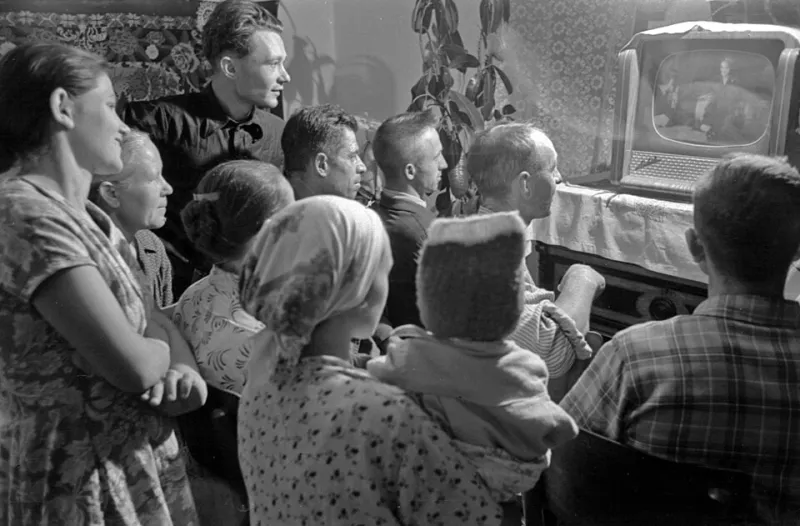
Photo: State Committee for Television and Radio Broadcasting of Ukraine (Soviet government body), Public domain, via Wikimedia Commons
The Martinez household in suburban Ohio owns exactly one television and, by last count, eleven streaming logins.
There's the shared family password that Grandpa refuses to update. The daughter's college account that technically belongs to her roommate's brother. The service Dad signed up for during a free trial in 2022 that he's fairly sure he's still paying for. And somewhere in a drawer, a drawer of remotes — four of them, each for a different device, none of them labeled.
"We don't watch TV anymore," Maria Martinez told me, half-joking. "We watch a login screen."
Remote Sprawl Is Real, and It Has a Census
Ask around and the pattern repeats in nearly every home. The average American household now juggles multiple streaming subscriptions, multiple devices, and — the truly exhausting part — multiple profiles per person per service. Grandma's drama account. The kids' cartoon queue. The roommate's sports add-on.
The living room hasn't become a home theater. It's become an IT department.
And the friction compounds in ways that don't show up on any bill:
- The remote pile. One for the TV, one for the soundbar, one for the streaming stick, one nobody can identify. Guests ask which one to use. Nobody knows.
- The profile shuffle. Every family member has their own row of profiles, and every service orders them differently. Dad's profile is the fourth one on one app and the first on another.
- The password vault. Usually a note in someone's phone titled "DO NOT DELETE," containing credentials for half the entertainment industry.
- The nightly negotiation. Who gets the living room, at what time, and on whose account — a diplomatic summit held daily at approximately 7:45 p.m.
Three Generations, One Screen
The Martinez setup is a case study in modern household complexity. Grandpa watches old westerns on a legacy service he learned in 2019 and will not deviate from. The teenage son bounces between three apps depending on which show is airing. The youngest uses a kids' profile that keeps defaulting to Dad's, which is how a seven-year-old ended up ten minutes into a crime documentary about tax fraud.
"We spent more time figuring out how to watch than actually watching," Maria said. "My son asked me for the 'TV password' like it's the Wi-Fi. It kind of is now."
The Peace Treaty: One Hub to Rule the Couch
Here's where the story turns. A quiet shift is happening in households like the Martinez family's, and it looks a lot like consolidation.
All-in-one hubs — single-entry portals that pull your services, apps, and watchlists into one place — are becoming the new family infrastructure. Instead of eleven logins and four remotes, the household runs on one address, one screen, one starting point. Everyone's services are there. Everyone's queue is there. The remote pile shrinks.
The families who've made the switch describe it in almost identical terms: the fighting stopped.
When everything lives behind one hub, the nightly negotiation changes shape. It's no longer "which app, which remote, whose password" — it's just "what are we watching." The logistics vanish. The politics remain, but at least they're honest politics now.
A Few Rules for Restoring Order
From the households that have tamed the sprawl, a field guide:
- Audit the logins. Most families find at least one forgotten subscription. That's found money.
- Consolidate the entry point. One hub, one bookmark, one place the whole family starts. Numeric-style addresses work well here — impossible to misspell, easy for Grandma to remember.
- Label the remotes. Or better, eliminate them. A single hub device means a single remote.
- Set the profile order. Kids first on the kids' device, adults first everywhere else. Write it down. Post it on the fridge. This is not a joke.
- Schedule the summit. A monthly five-minute check-in on who's using what prevents the winter subscription-creep audit from becoming a war crimes tribunal.
The New Family Values
Nobody dreamed that the future of television would involve this much administration. But the households that have figured it out share one insight: the problem was never too much content. It was too many doors.
One hub. One remote. One login the whole family can actually remember. It's not the jetpack future we were promised — but for the Martinez family, it's close enough. Grandpa found his westerns in under a minute last night.
Everyone agrees: that counts as peace.