Digital Real Estate in Six Digits: Inside the Quiet Market for Numeric Domains
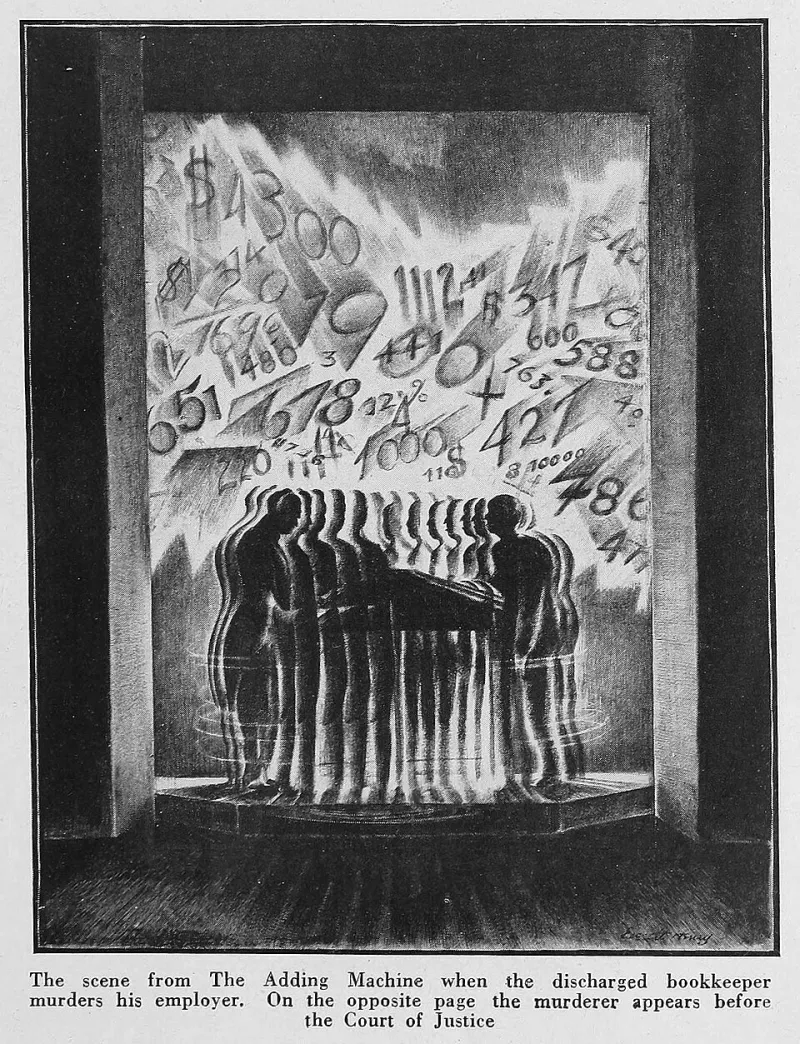
Photo: Everett Henry (1893-1961), Public domain, via Wikimedia Commons
Somewhere out there, someone just paid four figures for six digits.
No product. No brand name. Nothing to click, stream, or download. Just a web address made entirely of numbers — the kind of thing most of us type past without a second glance. And in the world of domain investing, that's exactly the point.
The Market Nobody Talks About
Domain investors — the folks who've spent decades snapping up names and flipping them — have long treated short domains as blue-chip assets. Three-letter .coms went the way of beachfront property years ago, selling for millions. Four-letter addresses followed. Which leaves the curious case of what's come next: numeric domains, especially six-digit .coms like 388620.com.
Here's the math that makes collectors salivate. There are exactly 10,000 possible three-digit combinations. There are a billion possible six-digit combinations — but only a fraction of those have any resonance with buyers, and fewer still are currently available. Scarcity, as always, does the heavy lifting.
And unlike a made-up brand name, a numeric domain carries no baggage. It doesn't mean anything in English, which means it means everything to the right buyer.
Who Actually Buys a String of Digits?
The buyer pool is more colorful than you'd expect.
There are the cultural numerologists — buyers from markets where digits carry meaning. In Chinese, the number 8 sounds like the word for wealth, making any domain heavy on 8s inherently valuable. A sequence like 388620 might read as gibberish in Ohio and as an auspicious investment in Shenzhen.
There are the privacy-first operators, who use numeric domains as neutral, unbranded entry points — a redirect hub, a landing page, an aggregator that doesn't want a name that gives anything away. Think of it as the digital equivalent of an unmarked door.
And there are the pure speculators, who treat domains like baseball cards: buy the rare ones, hold, wait for the market to catch up. Their logic is simple. Every year, more businesses go online, more startups launch, and the supply of short, memorable .coms never grows. It can't. The registry stopped taking new .com inventory in any meaningful sense decades ago.
Why Numbers Are the Last Frontier
The name game on the internet is basically over. Every dictionary word is taken. Every two-word combo is taken or priced like a car payment. Even creative misspellings — the Flickr-era trick — are exhausted.
Numbers, though, never had a boom-and-bust cycle of their own. They've appreciated quietly while everyone was fighting over nouns.
There's also a practical wrinkle: numeric domains are globally neutral. A word-based domain is anchored to a language. "Stream" means something in English and nothing in Portuguese. Digits mean the same thing everywhere, which is why numeric addresses have historically thrived in international markets and are only now getting attention from US-based investors and builders.
What Are They Actually Worth?
Valuation is part art, part auction. Appraisers look at:
- Length — shorter is exponentially rarer
- Pattern — repeating digits (888888), ascending runs (123456), and mirrored sequences command premiums
- Cultural resonance — lucky numbers, phone-number-style patterns, dates
- The .com premium — a numeric .com can be worth ten times its .net sibling
A middling six-digit .com might trade in the low hundreds. A pattern-rich one can clear five or six figures. The ceiling? Seven digits — the financial kind — for anything with a story attached.
The Hub Play: Numbers as Destinations
The most interesting recent trend isn't speculation at all. It's utility.
A new wave of sites is using numeric domains exactly as they were always suited for: as all-in-one hubs. A single address, impossible to misspell, impossible to outgrow, pointing at an aggregator of content, links, or services. The domain isn't the brand — it's the door.
For a generation of internet users exhausted by remembering which streaming app lives where, or which bookmark holds which tool, there's a strange appeal in an address that's just... numbers. Six digits. No vowels to fumble. No hyphens to forget.
The Bottom Line
The internet ran out of good names a long time ago, and it's slowly running out of good numbers too. The people buying addresses like 388620.com today aren't nostalgic — they're early. Whether these digits become the next great digital asset class or remain a niche collector's game, one thing's certain: the last frontier of the domain world was hiding in plain sight, right there on your keyboard, in the row you never use.
Every number. Every meaning. All in one address.